<img height="1" width="1" src="https://www.facebook.com/tr?id=820791394708431&amp;ev=PageView &amp;noscript=1">
Skip to the main content.


Ready to explore?

Come see the latest innovations, strategies, designs and technologies through hands-on experience.

Mural
Nav-Main-1-3

Featured Projects

Nav-Synovus
Synovus Place
Nav-Ledyard
Ledyard Bank
Nav-SF-Fire
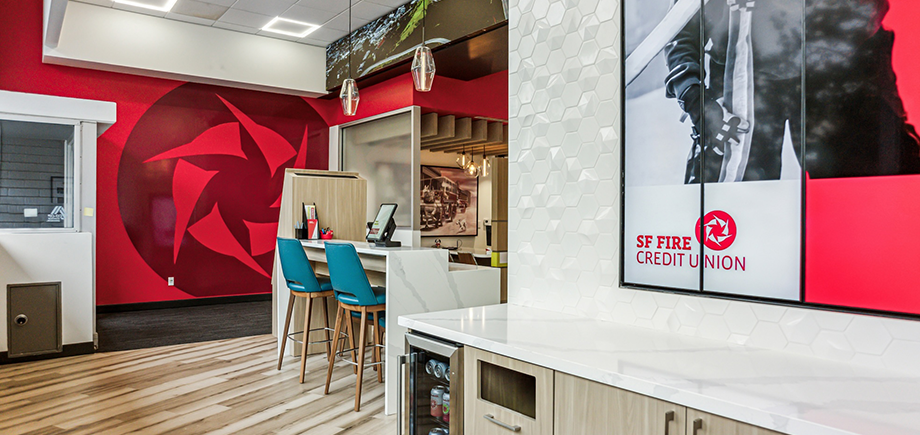
SF Fire CU
Nav-GECU
GECU

Banking Blog

Everything transformation lives here. From designing and building a new space to adding digital signage to adopting Universal Associates, you’ll find tips and tricks for it all.

Blog-Banking-2

Healthcare Blog

An elevated healthcare environment starts with an educated leadership team. This blog gives all the insights, from design-build to experiential marketing solutions.

Blog-Healthcare-2

Resource Library

1-Guides
Guides
2-Webinars
Webinars
3-Videos
Videos
4-Infographics
Infographics
5-Case-Studies
Case Studies
6-Reports
Reports
7-Tools
EBOOKS
   

News & Events

Stay updated on DBSI’s latest news and industry events shaping the future of retail transformation.

Visionary Voices 2026

Join us for DBSI's exclusive experience designed to shape the future of banking.

VV26-Nav

Let's Talk

If you’re ready to get started with your next project and think DBSI may be a good partner, we should chat.

Careers

We are always looking to add talented, forward-thinking innovators to our team. If that sounds like you, you should apply for a role with us.

Sign Up For Our Newsletter

We are always looking to add talented, forward-thinking innovators to our team. If that sounds like you, you should apply for a role with us.

Desert-Purple-Back-2

4 min read

Why ‘No’ Is the Most Expensive Word in the Boardroom

Why ‘No’ Is the Most Expensive Word in the Boardroom

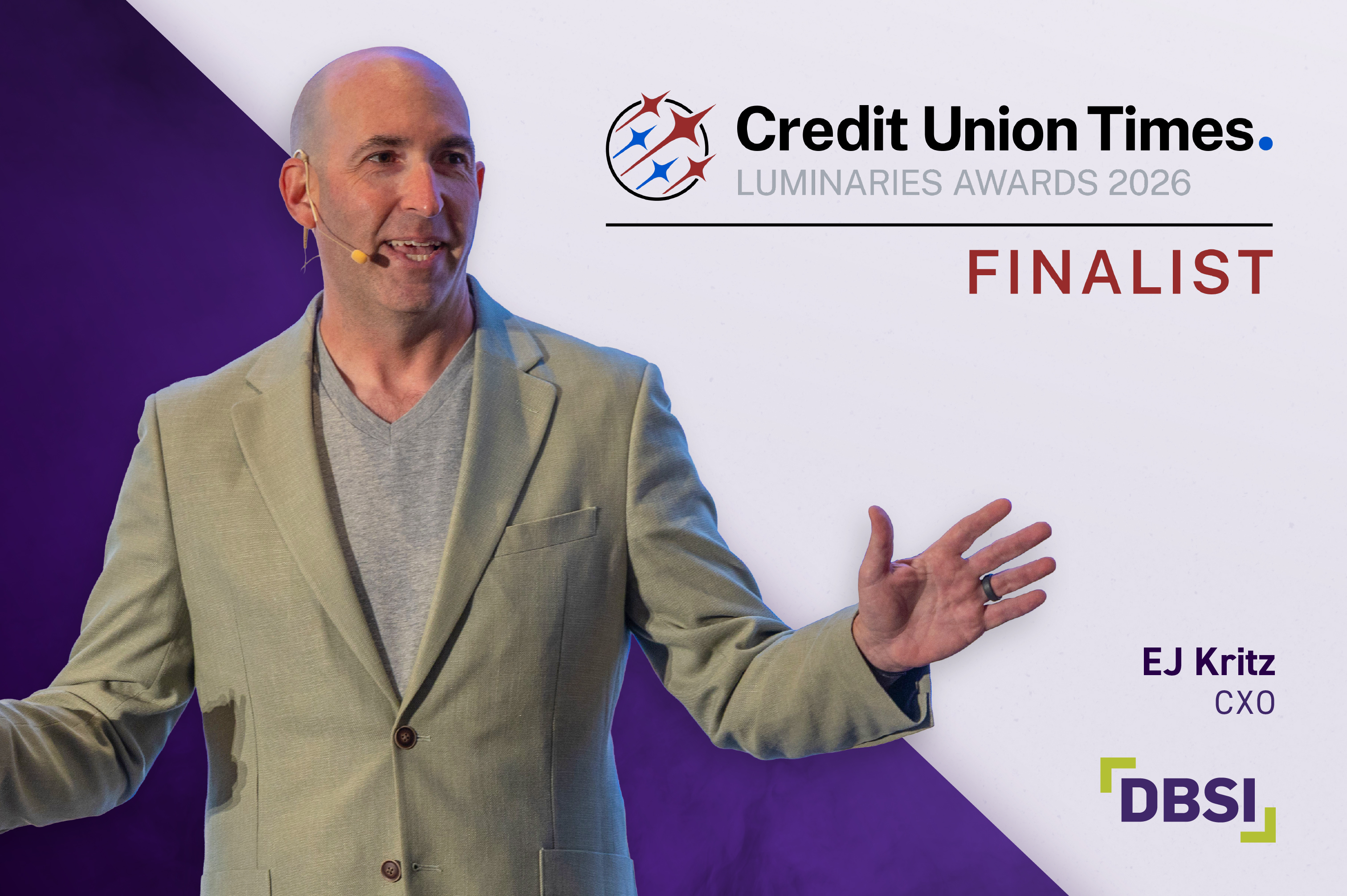
E.J. Kritz, Chief Experience Officer at DBSI, was featured in The Financial Brand, discussing why “no” can be the most expensive word in the boardroom—and how leaders can remove the friction that stalls meaningful transformation.

Read on The Financial Brand


“I will assess his (the CEO’s) mood after tonight’s board meeting. It’s going to be a doozy. Everything right now is sheer chaos.”

That’s the text I received from a community bank’s marketing director shortly after the new year began, and it’s not the only one. It seems board meetings, budget seasons, and strategic planning are building walls in front of the very progress they’re intended to promote. It has me thinking:

Is the boardroom quietly killing community banks and credit unions?

I had the opportunity to catch up with an old friend last week who, for most of our relationship, has been the CEO of a ~$300M credit union. The news that they had decided to leave a lofty CEO post in favor of a lesser out-of-industry position shocked me. The reason did not.

“The board just wouldn’t let us do anything to grow.”

Of course, it’s false that all boards or their members are bad. However, the number of times executives feel hamstrung may be the huge untold story of banking. Besides, is the CEO really going to complain to the very group of people who determine their job security? Then again, failure doesn’t help pay the bills either.

Here are five very real ways boards unintentionally hold their institutions back from meaningful, long-term transformation:


1. Risk avoidance rather than risk management.

It’s the board’s job to govern risk, not to eliminate it completely. I remember being taught early in my banking career while at TD, “we have the responsibility to take risks we understand.”

Avoiding risk entirely manifests itself in the form of asking “what if it fails” or worse, going through analysis and decision-making paralysis by only saying yes with a “guarantee” of success.

In a world where fintechs constantly reinvent banking and the big banks play in the sandbox with new ideas, simply put, zero risk tolerance = guaranteed irrelevance.

The biggest risk to most community financial institutions today isn’t doing something wrong or making a bad investment. It’s doing nothing new at all.


2. “We’ve always done it that way.”

It’s an oldie but a goodie, one that is usually attributed to legacy employees, not the board.

But wait: Who is on the board? Former CEOs (who might be former for a reason), business leaders who have nothing to do with banking innovation, and wealthy customers.

Apart from being a group naturally inclined to play it safe, they’re generally a group wildly out of touch with the growing needs of the emerging Gen-Z, Millennial, and Gen-Alpha market.

Southwest Airlines recently decided that just because they had open seating for the first 55 years of their company, it didn’t necessarily mean it was the right process for the next 55. Sound familiar?

Experience is an asset until it becomes a blindfold.


3. Pilot. Pilot. Pilot.

People, not just boards, generally hate the idea of making a terrible permanent decision.

The typical board loves to hear phrases like “one time investment”, “pilot program”, and anything with an end date. Things like culture change or “frequent reinvestments” are giant red flags in the boardroom.

All this makes “transformation” a box to be checked rather than a permanent part of the culture. If a board expects transformation to have a deadline, leadership teams gain the learned behavior to bury root causes, play it safe, and leverage duct tape instead of permanent solutions.


4. You get what you pay for.

It’s a lesson we’ve learned time and time again when it comes to variable compensation: You’ll get the behaviors associated with the outcomes that are rewarded. We’ve seen it with sales integrity, and we see it in the corner office.

This one is sneaky and deadly because it combines the reward of short-term performance while also demanding long-term growth.

CEOs are generally evaluated on the balance sheet: Efficiency ratios, earnings, margins, etc.

But what do boards ask them for?

Innovation, expand to new markets, modernize the experience. “Look cool to the kids.”

We can’t expect long-term progress while paying on short-term KPI’s.


5. Walk the walk.

Successful bank leaders spend time in the field. That doesn’t mean they have scheduled branch visits to shake hands and kiss babies. It means spending real time both in and out of the business.

Open accounts, shop the competition, play around in the digital environment, go to a branch unannounced… this is where questions fade into truth.

Boards must do the same. Saying “our customers love our people,” is not a replacement for a broken journey.

It’s virtually impossible to govern what you don’t personally experience.


The Uncomfortable Truth

Most boards aren’t against change, filled with angry old people, and in it because they have nothing better to do with their time.

They are pro-stability in an industry that no longer rewards it.

For executives seeking to bridge a new world to an old board, without risking their jobs, I offer the following recommendations:

  1. Present your ideas with guardrails and a plan to contain downside. Paint the picture of what success and failure would look like.

  2. Don’t wait for the board meeting. Act like a lobbyist by engaging in 1:1 conversations between board meetings to generate consensus before the ask has even been made.

  3. Break transformation into bite size pieces, showing the board that you’ll test and learn now and ask for capital later.

  4. Show what doing nothing would look like by visualizing shift in primacy, wallet share, and increased customer acquisition costs.

  5. Bring the board to the dance and enable them to gain first-hand experience through walkthroughs, demos, conference participation, and more. (Bring them to the Financial Brand Forum for example!)

The answer isn’t fewer “no’s.” It’s better ones.

Boards and CEOs don’t need to agree on every initiative, but they do need a shared definition of acceptable risk and a willingness to test what could be possible versus rejecting the opportunity to test and learn.

For boards, that means the time has come to ask new and different questions. Challenge yourself to assess the risk of inaction and ask if you’re truly protecting the company or simply the way it’s always been run.

For CEO’s, don’t position change as a leap of faith but instead, a thoughtfully considered journey with guardrails, accountability, and even reward.

Forget winning. The institutions that will survive over the next decade won’t spend time figuring out how to avoid mistakes. They will be the organizations that learn together, understand risk, and know that the most expensive decision might be the one that is never made.